Top Compact Gear Motor Manufacturers for Global Buyers

Time:2026-09-13 Author:Amelia
0%

Global buyers are reassessing Compact Gear Motor suppliers as automation expands across factories, warehouses, medical equipment, and smart appliances. These motors combine a gearbox and electric motor in a space-saving assembly. They deliver controlled torque where every millimeter matters. A conveyor diverter, for example, may require steady movement under dust, heat, and repeated starts.

The International Energy Agency reported in Energy Efficiency 2017 that electric motor systems consume approximately 46% of global electricity. This figure explains why motor efficiency, control quality, and service life deserve careful attention. The U.S. Department of Energy also identifies motor systems as a major industrial energy-use category. For buyers, a small efficiency difference can become a large operating cost across thousands of machines.

Market research from Grand View Research and MarketsandMarkets indicates continued growth in industrial automation and motion-control equipment. However, these reports usually group several motor technologies together. They do not always isolate compact geared units. That limitation matters. A supplier ranking should therefore examine more than market size.

This guide considers manufacturers through practical buying criteria. These include rated torque, gear ratio options, thermal performance, noise levels, ingress protection, control compatibility, and documented quality systems. IEC alignment, traceable testing, and responsive technical support also influence long-term reliability. A polished catalog is not enough.

Real-world fit matters.

Some manufacturers excel in high-volume standard models. Others provide stronger customization or regional support. Buyers should verify test data, warranty terms, lead times, and replacement availability before committing. The best choice may not be the cheapest unit. It should offer dependable performance, transparent specifications, and evidence that matches the application.
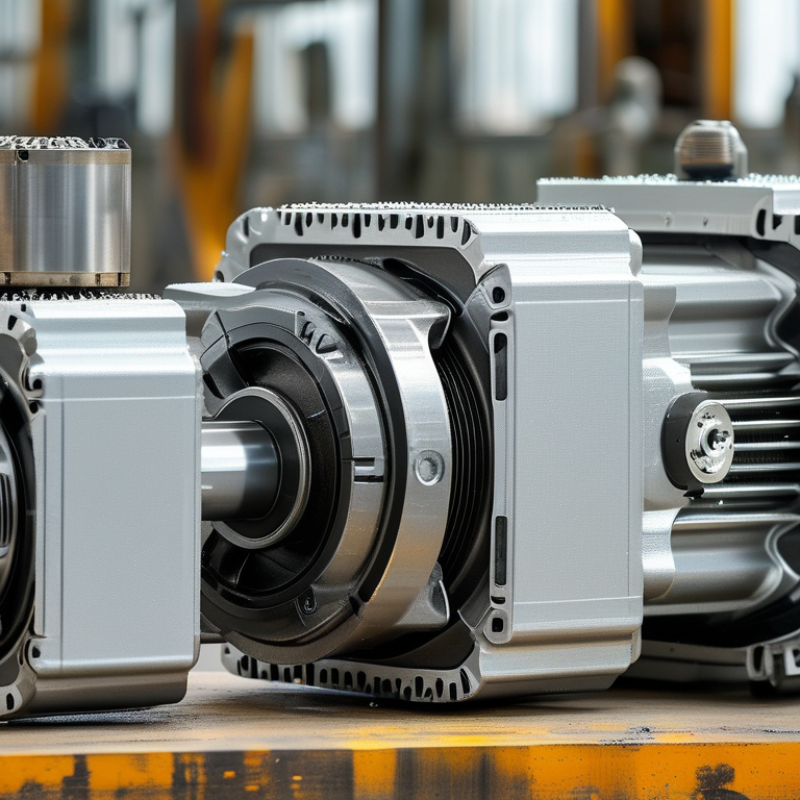
Top Compact Gear Motor Manufacturers for Global Buyers

What Defines a Compact Gear Motor and Its Industrial Advantages

A compact gear motor combines an electric motor with a reduction gearbox in one small drive unit. Its geared output lowers speed and increases usable torque. The design saves installation space in conveyors, packaging machines, medical equipment, and automated production lines. Compact does not mean weak. A well-matched unit can deliver steady motion inside a narrow machine frame.

Industrial value comes from controlled performance. Gear reduction supports smoother starts, accurate positioning, and lower motor speed. This can reduce mechanical stress on belts, chains, and connected shafts. Sealed housings may also protect internal parts from dust or light moisture. However, protection depends on the actual enclosure rating, not appearance. Thermal limits, duty cycle, noise, backlash, and service access require careful checking. In plant evaluations, incorrect sizing remains a common problem. A small motor may fit perfectly but overheat during repeated starts.

Tips: Compare rated torque with peak load, not average load alone. Check gearbox efficiency, shaft orientation, mounting dimensions, and operating temperature. Ask for test data and documented tolerances. Leave room for ventilation and maintenance. A quieter motor is not automatically a better motor. Application demands should guide the choice.

Key Selection Criteria for Global Gear Motor Buyers

Top Compact Gear Motor Manufacturers for Global Buyers

Global buyers should judge compact gear motor manufacturers by application fit, not catalog size. Check rated torque, output speed, duty cycle, voltage, and mounting dimensions. A motor may fit a drawing but fail under continuous load. Ask for thermal data, noise readings, efficiency curves, and service-life testing. Reliable suppliers provide clear datasheets and traceable inspection records.

Environmental conditions matter. For outdoor equipment, confirm ingress protection, corrosion resistance, and operating temperature. For food, medical, or automated systems, request suitable materials and documented compliance. Review production capacity, lead times, spare-part access, and technical support across time zones. A low unit price can become expensive after redesigns, delays, or repeated failures. Sample testing remains essential, even when the specifications look complete.

Tips: Test the motor at real load, not only no-load speed. Confirm shaft tolerances with a physical sample. Ask how quality failures are handled. No process is perfect. A spreadsheet can hide vibration, heat, or assembly difficulty. Keep written test results, but also inspect sound, temperature rise, and backlash during operation. Global buyers should compare total ownership cost, warranty terms, communication quality, and documentation before approving a manufacturer. One overlooked connector or mounting error can stop an entire production line.

Top Compact Gear Motor Manufacturers for Global Buyers – Key Selection Criteria for Global Gear Motor Buyers
Selection Criterion What Global Buyers Should Compare Typical Compact Gear Motor Data Recommended Verification Evidence Priority
Rated Output Power Continuous mechanical power available at the specified voltage, speed, ambient temperature, and duty cycle. Approximately 10 W to 3 kW for many compact industrial and automation applications. Rated-power curve, continuous-duty rating, thermal test data, and application-specific operating conditions. Critical
Output Torque Continuous and peak torque at the required output speed; confirm whether the value is gearbox output torque or motor-shaft torque. Calculate using T = 9550 × P ÷ n, where T is N·m, P is kW, and n is rpm. Peak torque should be checked separately. Torque-speed curve, service-factor calculation, overload limit, and starting or stall torque data. Critical
Output Speed and Gear Ratio Required nominal speed, allowable speed tolerance, reduction ratio, and whether multiple reduction stages are used. Common compact gear motor ratios range from about 3:1 to 3000:1, depending on gear type and number of stages. Ratio table, no-load and rated-load speed data, backlash specification, and speed-tolerance information. Critical
Gear Technology Suitability of spur, helical, planetary, worm, bevel, or harmonic-style mechanisms for efficiency, noise, torque, and space limits. Planetary and helical designs generally provide high torque density and efficiency; worm designs offer compact right-angle layouts but may have higher losses. Gear-material specification, tooth-treatment details, efficiency data, allowable radial and axial loads, and noise test method. High
Electrical Input Voltage, current, phase, frequency, connector configuration, controller compatibility, and protection against reverse polarity or overload. Common inputs include 12 V, 24 V, and 48 V DC, plus 115 V, 230 V, and 400 V AC in industrial applications. Electrical datasheet, wiring diagram, inrush-current value, rated-current value, and compatibility statement for the intended drive. Critical
Motor Control and Feedback Suitability for direct-on-line operation, PWM control, variable-frequency drives, servo drives, encoders, Hall sensors, or electromagnetic brakes. Available feedback options may include incremental encoders, Hall sensors, resolvers, or sensorless operation, depending on the motor architecture. Control compatibility list, feedback resolution, signal specification, brake torque, and stopping-time data. High
Efficiency and Thermal Performance Motor efficiency, gearbox efficiency, total system efficiency, heat dissipation, and permissible temperature rise. Total gear motor efficiency varies widely by motor type, gear ratio, load, lubrication, and operating speed; request measured system efficiency at the actual duty point. Efficiency map, temperature-rise test, thermal derating curve, insulation class, and continuous-duty test report. Critical
Duty Cycle and Service Factor Continuous, intermittent, cyclic, reversing, indexing, or standby operation; include starts per hour and acceleration requirements. Continuous duty is commonly identified as S1 under IEC motor-duty classifications; other applications may require S3, S4, or S5 analysis. Duty-cycle calculation, service factor, permissible starts per hour, acceleration profile, and overload capability. Critical
Ingress Protection and Environment Resistance to dust, water, washdown, humidity, chemicals, salt spray, vibration, and outdoor exposure. Typical enclosures range from IP54 for protected indoor use to IP65/IP67 for dusty or wet environments; higher ratings require application-specific validation. IP test report based on IEC 60529, sealing details, corrosion-resistance data, operating-temperature range, and humidity test results. High
Mechanical Interface Mounting pattern, shaft diameter and length, keyway, flange type, terminal orientation, permissible overhung load, and installation position. Common interfaces include foot-mounted, face-mounted, flange-mounted, parallel-shaft, and right-angle configurations. Dimensioned CAD drawing, shaft-tolerance data, mounting-hole standard, allowable loads, and installation-position restrictions. Critical
Noise, Vibration, and Backlash Acoustic noise, vibration level, output backlash, torsional stiffness, and suitability for precision positioning or quiet equipment. Noise and backlash depend strongly on gear geometry, manufacturing tolerance, lubrication, load, and speed; compare test results using the same measurement conditions. Noise measurement method, vibration grade, backlash specification in arc minutes or degrees, and end-of-line inspection records. High
Reliability and Service Life Expected operating life, bearing life, gear fatigue life, lubrication life, sealing durability, and maintenance requirements. Bearing calculations commonly use L10 life methodology; actual service life must be calculated from load, speed, duty cycle, temperature, and lubrication conditions. Life-test report, L10 bearing calculation, lubrication specification, maintenance schedule, warranty terms, and failure-analysis process. Critical
Compliance and Market Access Electrical safety, electromagnetic compatibility, energy-efficiency requirements, documentation, and destination-market conformity. Request documentation referencing applicable requirements such as IEC 60034, IEC 60529, EMC requirements, and the legal conformity rules of the destination market. Declaration of conformity, test reports, risk assessment, EMC results, technical file, and product traceability records. Critical
Customization Capability Ability to modify winding, gearing, shaft geometry, connectors, brakes, encoders, coatings, packaging, or firmware. Common engineering options include custom voltage, output shaft, mounting interface, connector, gear ratio, feedback device, and brake configuration. Engineering-change process, drawing-approval workflow, prototype lead time, validation plan, and minimum order quantity. High
Supply Continuity and Lead Time Production capacity, component availability, dual sourcing, forecast flexibility, geographic logistics, and emergency replenishment capability. Evaluate normal production lead time, sample lead time, safety-stock policy, annual capacity, and documented delivery performance rather than relying only on quoted dates. Capacity statement, production schedule, supplier-audit results, on-time-delivery history, business-continuity plan, and packaging specification. High
Total Cost of Ownership Purchase price plus controller cost, installation, energy consumption, maintenance, replacement parts, downtime, shipping, tariffs, and warranty exposure. A lower purchase price may be offset by higher energy losses, shorter service life, greater noise, or limited spare-part availability. Five-year cost model, energy-efficiency data, spare-parts price list, warranty conditions, repair policy, and logistics quotation. High
Buyer note: The stated ranges are general industry reference values for compact gear motor selection, not guaranteed ratings for every product. Final selection should be based on the complete load profile, duty cycle, environmental conditions, required conformity documentation, and supplier test data.

Leading Compact Gear Motor Manufacturers by Product Strengths

Compact gear motor manufacturers increasingly compete through specific product strengths, not broad catalogs.

According to a 2024 MarketsandMarkets report, the global gear motor market may grow from about USD 27.9 billion in 2023 to USD 37.1 billion by 2028. This growth reflects demand for smaller, quieter, and more efficient drive systems in robotics, packaging, medical equipment, and automated storage.

Precision-focused manufacturers often emphasize planetary gear motors. These units provide high torque density, low backlash, and stable positioning for robotic joints and inspection equipment.

Helical designs suit conveyors and compact industrial machinery because they deliver smoother transmission and better continuous-duty performance.

Worm gear specialists offer high reduction ratios and useful self-locking behavior, although efficiency can fall sharply under certain loads.

Integrated suppliers combine the motor, gearbox, encoder, and controller in one housing. That approach reduces wiring and installation space. It can also simplify maintenance. However, integration is not automatically better. Heat dissipation and service access still require careful review.

The U.S. Department of Energy reports that motor systems consume roughly 53% of global electricity, making efficiency a practical purchasing issue. Buyers should compare rated torque, duty cycle, noise, thermal limits, backlash, ingress protection, and tested efficiency.

No shortlist is perfect. Fit matters. A compact unit with impressive peak torque may perform poorly during continuous operation. Requesting endurance data, dimensional drawings, and application-specific test results remains more reliable than judging products by catalog figures alone.

Applications and Performance Requirements Across Major Industries

Compact gear motors serve very different duties across manufacturing, logistics, food processing, agriculture, and medical equipment. Conveyor drives need steady torque, controlled speed, and reliable starts under changing loads. Robotic transfer units demand low backlash and precise positioning. In food plants, sealed housings, corrosion resistance, and easy sanitation matter more than maximum output. A small motor can still run hot.

The International Federation of Robotics reported 541,302 industrial robot installations worldwide in 2023. This growth increases demand for compact drives with repeatable motion and strong thermal performance. Warehouse systems also require quiet operation, frequent reversing, and high duty cycles. In agriculture, gear motors face dust, moisture, shock loads, and unstable power conditions. Protection ratings must match the actual environment, not a sales brochure.

The International Energy Agency estimates that electric motor systems use about half of global electricity. It also identifies efficiency improvements as a major energy-saving opportunity. Buyers should therefore compare motor efficiency, gearbox losses, standby consumption, and service life together. A higher-rated motor is not always better. Oversizing may increase cost and reduce control quality. I have seen specifications focus on torque while ignoring heat dissipation and starting frequency. That oversight becomes expensive. Real testing under load remains essential.

How to Evaluate Suppliers, Compliance, Pricing, and After-Sales Support

Choosing a compact gear motor supplier requires more than comparing catalog photos. Experienced buyers should review factory capabilities, testing records, and production consistency. Ask whether the supplier controls gear accuracy, noise, temperature rise, and shaft alignment. Request recent inspection reports, not generic certificates.

Compliance must match the destination market and application. Check product markings, electrical safety documents, material declarations, and technical files. Confirm whether certificates cover the exact motor model. Some suppliers provide attractive paperwork, but the tested version may differ. That gap can create costly delays. Pricing also needs careful review. Compare motor torque, reduction ratio, duty cycle, packaging, tooling, shipping terms, and warranty coverage. A cheaper quotation may exclude essential testing or spare parts.

After-sales support is often the real supplier test. Ask for response times, troubleshooting procedures, replacement policies, and access to engineers. Clarify how faults are analyzed, especially when motors operate inside automated equipment. Keep communication records and approve a sample before placing a larger order. Small details matter.

Tips: Build a scoring sheet with quality, compliance, price, lead time, and service. Test samples under realistic loads. Do not trust promises alone. However, even a detailed checklist can miss production changes, so schedule periodic reviews and request updated records.

FAQS

How should global buyers evaluate a compact gear motor supplier?

Judge application fit, not catalog size. Check torque, speed, duty cycle, voltage, and mounting dimensions. Clear datasheets matter.

Why is sample testing necessary before approval?

Drawings may hide heat, vibration, backlash, or assembly problems. Test the motor under real load, not only no-load speed. A physical sample reveals shaft tolerance issues.

Which tests should buyers request from manufacturers?

Request thermal data, noise readings, efficiency curves, and service-life results. Keep written records. Also inspect sound and temperature during operation.

What environmental features matter for outdoor equipment?

Confirm ingress protection, corrosion resistance, and operating temperature. Agriculture may add dust, moisture, shocks, and unstable power. A brochure may not match the field.

What requirements apply to food, medical, and automated systems?

Consider sealed housings, suitable materials, sanitation access, and documented compliance. Food equipment needs corrosion resistance. Maximum output is not always the priority.

How should buyers match motors with industrial applications?

Conveyors need steady torque and reliable starts. Robotic units need low backlash and precise positioning. Warehouse systems need quiet reversing and high duty cycles.

Is a higher-rated motor always the better choice?

No. Oversizing can raise costs and weaken control quality. Compare efficiency, gearbox losses, standby use, and service life together. Torque alone is incomplete.

What should buyers include in total ownership cost?

Include unit price, redesign risk, delays, spare parts, support, warranty terms, and energy use. One mounting error can stop a production line. Cheap can become expensive.

Conclusion

A Compact Gear Motor combines a compact electric motor with an integrated gearbox to deliver controlled speed, increased torque, and efficient power transmission in limited spaces. Its small footprint, stable operation, flexible mounting options, and relatively low maintenance make it valuable for automation, material handling, packaging, medical equipment, robotics, and other industrial systems. Global buyers should evaluate rated torque, speed range, duty cycle, efficiency, noise, thermal performance, protection rating, dimensions, and compatibility with the intended control system.

When comparing manufacturers, buyers should consider product specialization, customization capabilities, manufacturing consistency, testing procedures, certifications, and the ability to support different voltage and frequency requirements. Supplier evaluation should also include transparent pricing, minimum order quantities, delivery reliability, warranty terms, spare-parts availability, technical documentation, and responsive after-sales service. A well-matched Compact Gear Motor should meet both the application’s performance demands and the buyer’s long-term requirements for safety, reliability, compliance, and total operating value.

Amelia

Amelia

Amelia is a seasoned marketing professional with a wealth of expertise in our company’s core offerings. With an unwavering passion for driving growth and innovation, she plays a pivotal role in shaping our marketing strategies and enhancing brand visibility. A key aspect of her responsibilities......