What Are the Best China Automotive Gear Motor Manufacturers?

Time:2026-09-23 Author:Henry
0%

Choosing the right Automotive Gear Motor manufacturer in China requires more than comparing prices and catalog photos. Performance depends on torque, gear ratio, noise control, sealing, and production consistency. A motor that works well on a test bench may behave differently inside a vehicle, especially under heat, vibration, and repeated start-stop cycles.

This guide examines China automotive gear motor manufacturers through practical and technical criteria. These include engineering capability, material selection, winding quality, gearbox design, and end-of-line testing. It also considers ISO certification, IATF 16949 experience, traceability systems, and export support. Reliable suppliers should explain their tolerances clearly. They should also provide test data, samples, drawings, and realistic delivery schedules.

There is no single “best” manufacturer for every application. A compact seat-adjustment motor needs different priorities than a window-lift, cooling-flap, or electric tailgate motor. Buyers should ask for load curves, duty-cycle results, protection ratings, and noise measurements. Factory visits can reveal details that brochures hide, such as clean assembly areas, calibrated equipment, and organized component storage.

Some supplier claims may look impressive but remain difficult to verify. That matters. Independent sample testing and small pilot orders can reduce risk before large-scale purchasing. The manufacturers discussed here are evaluated with this practical mindset, combining documented capabilities with reasonable caution. In this market, dependable communication may matter as much as a low quotation.
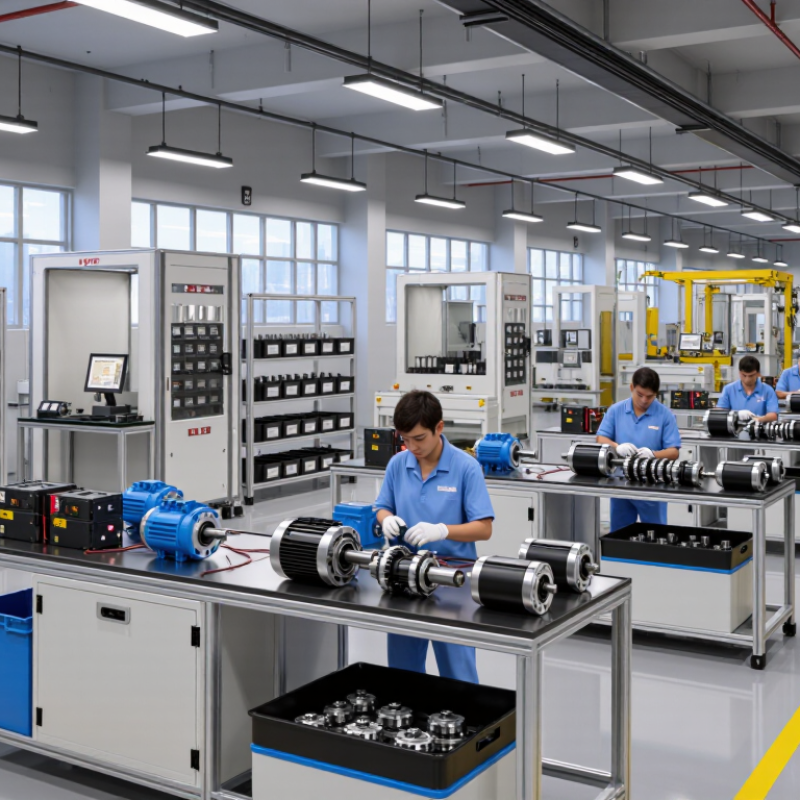
What Are the Best China Automotive Gear Motor Manufacturers?

What Is an Automotive Gear Motor and Where Is It Used?

An automotive gear motor combines an electric motor with a gearbox. The motor creates rotation. The gearbox reduces speed and increases torque. This compact arrangement moves heavy components inside limited vehicle spaces.

You can find gear motors in power windows, seat adjustment systems, windshield wipers, door locks, sunroofs, and HVAC flaps. Electric tailgates and charging-port covers use them too. In electric vehicles, thermal-management pumps and actuator systems create further demand. The International Energy Agency reported nearly 14 million electric cars sold worldwide in 2023. That shift increases attention on low-noise, efficient, and durable gear-motor assemblies. Small parts now influence daily comfort.

A practical buyer should assess torque, gear ratio, backlash, thermal resistance, noise, sealing, and service life. China automotive gear motor manufacturers should also provide traceable testing data and application samples. The best supplier is not always the largest one. OICA recorded more than 93.5 million motor vehicles produced globally in 2023, showing the scale of automotive quality pressure. However, production statistics do not prove component reliability. That requires endurance testing under vibration, temperature changes, moisture, and repeated load cycles. Testing can still miss real-road behavior. Engineers should review failure records and inspect samples before approving mass production.

Which Technical Features Define a High-Quality Gear Motor?

What Are the Best China Automotive Gear Motor Manufacturers?

A high-quality automotive gear motor begins with controlled torque, speed, and gear ratio. Its rated output should match the vehicle function, not merely the catalog headline. Engineers should review torque at startup, continuous load, and sudden reversal. A motor that performs well on a warm test bench may struggle inside a cold door module.

Temperature matters.

Efficient designs usually combine copper-filled windings, suitable magnets, low-friction bearings, and accurately cut gears. However, efficiency alone can mislead. Backlash, gear noise, and vibration may still affect the final assembly. Ask for measured noise data at defined speeds and loads. Check whether the supplier tests gear wear after repeated cycles. A small backlash error can become obvious in a seat adjuster or window lift.

Protection and consistency reveal manufacturing maturity. Look for sealed housings, verified ingress protection, thermal protection, and connectors suited to automotive vibration. Traceable materials and end-of-line testing also matter. Useful records include current draw, torque, speed, noise, and insulation results for each production batch. Standards such as IATF 16949 support process discipline, but certification cannot replace independent validation. Request sample data, test conditions, and failure limits. Some specifications remain vague. That deserves scrutiny. A reliable manufacturer should explain tolerances clearly, disclose design limitations, and support durability testing under realistic voltage, temperature, and load conditions.

How Should China’s Automotive Gear Motor Manufacturers Be Compared?

China’s automotive gear motor manufacturers should be compared through verified performance, not catalog claims. OICA reported that China produced more than 30 million motor vehicles in 2023. That scale creates strong manufacturing experience, but volume alone proves little.

Check continuous torque, peak torque, gear ratio, efficiency, backlash, noise, and thermal endurance. Ask for test curves at different temperatures, not one laboratory result. The IEA’s Global EV Outlook 2024 recorded more than 8 million electric car sales in China during 2023. This growth increases demand for compact, quiet, and efficient gear motors in windows, seats, pumps, steering systems, and thermal controls.

Measure quality systems carefully. IATF 16949 certification, traceable materials, end-of-line testing, and documented failure analysis indicate stronger process control. Request samples from the same production line. Inspect gear teeth, shaft alignment, connector sealing, and grease distribution. Small defects become obvious through vibration and repeated cycling.

Look beyond the lowest quotation. A cheaper unit may use thinner gears, weaker magnets, or limited temperature testing. However, certification does not guarantee field reliability. Review warranty data, response times, spare-part policies, and independent laboratory reports. Compare equivalent specifications. Otherwise, the result may be misleading. A practical evaluation should include at least three suppliers, identical test loads, and a written scoring sheet covering performance, consistency, engineering support, and total lifecycle cost.

What Certifications and Production Capabilities Should Buyers Verify?

When evaluating China automotive gear motor manufacturers, buyers should verify certifications beyond a wall display. ISO 9001 indicates a quality system, while IATF 16949 shows alignment with automotive production controls. ISO 14001 may support environmental management. Check each certificate’s legal entity, factory address, scope, and expiration date. Ask for the latest audit findings, not only a scanned certificate. A certificate is not proof of every batch.

Production capability needs closer inspection. Confirm whether the factory performs gear hobbing, CNC machining, heat treatment, motor winding, assembly, and end-of-line testing internally. Outsourcing is not automatically a weakness, but it must be controlled. Request process flow charts, control plans, PFMEA records, and sample inspection reports. Good suppliers can show torque curves, noise measurements, backlash data, thermal endurance results, and service-life testing under realistic loads.

For automotive projects, ask whether the manufacturer supports APQP, PPAP, SPC, and MSA practices. Review material traceability from steel lot to finished gear motor. Visit the plant if possible. Look at calibration labels, clean assembly areas, oil leakage tests, and serial-number tracking. Small details matter. A missing calibration record deserves questions.

Some factories report impressive monthly capacity but rely heavily on manual assembly. That may affect consistency during demand changes. Verify annual output, current utilization, backup equipment, mold ownership, maintenance records, and planned expansion. No supplier is flawless. However, transparent answers, repeatable data, and a willingness to discuss weak points usually reveal stronger engineering discipline.

What Are the Best China Automotive Gear Motor Manufacturers? - What Certifications and Production Capabilities Should Buyers Verify?

Verification Dimension Certification, Standard or Capability What Buyers Should Verify Relevant Evidence Why It Matters for Automotive Gear Motors
Quality management ISO 9001:2015 Confirm that the certificate is current, covers the relevant manufacturing site, and includes the design or production scope being purchased. Certificate number, issuing certification body, validity dates, scope statement, and successful audit records. Provides a documented framework for process control, corrective action, traceability, and customer complaint handling.
Automotive quality systems IATF 16949:2016 Verify that the certification applies to the actual production facility and product scope, rather than only to a trading or administrative office. Current IATF certificate, site audit status, customer-specific requirements process, APQP, PPAP, FMEA, MSA, and SPC records. Demonstrates alignment with widely used automotive requirements for defect prevention, process capability, risk management, and continuous improvement.
Environmental management ISO 14001:2015 Check whether the environmental management system covers the production site and relevant manufacturing activities. Valid certificate, environmental objectives, waste-management procedures, hazardous-substance controls, and audit reports. Supports responsible control of energy use, waste, emissions, chemicals, and environmental compliance.
Restricted substances RoHS and REACH compliance Define the destination-market requirements and verify the complete bill of materials, including coatings, solders, plastics, lubricants, magnets, and electronic components. Material declarations, supplier declarations, laboratory test reports, and periodic compliance updates. Reduces the risk of restricted substances in motors, gear trains, wiring, connectors, and control electronics.
Electrical safety and market access Applicable regional conformity requirements, such as CE or UKCA Confirm which directives, regulations, voltage ranges, and product configurations are covered; do not treat a logo alone as proof of compliance. Declaration of conformity, technical file, risk assessment, test reports, wiring information, and product-specific markings. Helps establish whether the finished gear motor can legally be placed on the intended market.
Motor performance standards IEC 60034 series or applicable national equivalents Confirm the test method, rated conditions, duty type, insulation system, temperature-rise limits, and measurement tolerances. Performance test reports, motor nameplate data, insulation-class records, efficiency results, and acceptance criteria. Creates a consistent basis for evaluating speed, torque, current, efficiency, heating, and electrical performance.
Gearbox design and manufacturing In-house gear cutting, hobbing, shaping, grinding, heat treatment, or controlled qualified suppliers Verify gear module or diametral pitch range, materials, heat-treatment method, hardness range, gear accuracy, and inspection frequency. Machine list, process flow, material certificates, hardness reports, gear inspection charts, and supplier-qualification records. Directly affects torque capacity, noise, backlash, wear life, efficiency, and dimensional consistency.
Precision and dimensional control Coordinate measuring machines, gear measurement systems, gauges, and calibrated instruments Ask for calibration intervals, traceability to recognized standards, measurement uncertainty, and inspection plans for critical dimensions. Calibration certificates, control plans, capability studies, first-article inspection reports, and dimensional inspection records. Controls shaft alignment, bearing fits, gear mesh, mounting interfaces, sealing, and interchangeability.
Motor winding and assembly Automated or controlled winding, impregnation, soldering or termination, rotor balancing, and assembly processes Verify process parameters, operator qualification, insulation handling, balancing grade, assembly poka-yoke, and end-of-line checks. Process instructions, parameter logs, balancing records, winding resistance data, and end-of-line test results. Improves consistency in starting performance, vibration, insulation reliability, thermal behavior, and service life.
End-of-line testing Electrical, mechanical, acoustic, and functional testing Confirm that every unit or an agreed statistically justified sample is tested for current, voltage, speed, torque, noise, vibration, and insulation performance. Test specifications, equipment calibration records, serialized test data, rejection criteria, and traceable final inspection reports. Detects assembly and performance defects before shipment and provides objective acceptance data.
Reliability validation Life testing, thermal testing, overload testing, stall testing, vibration testing, and environmental testing Match the test profile to the application: duty cycle, load, ambient temperature, humidity, vibration, ingress exposure, and expected operating life. Validation plan, failure criteria, test duration, sample size, teardown analysis, and corrective-action reports. Reveals wear, overheating, lubricant problems, bearing failures, gear damage, and insulation degradation.
Traceability and change control Lot, batch, serial-number, material, and process traceability Verify that critical components and production records can be traced from incoming material through assembly and shipment. Serial-number rules, batch records, engineering-change notices, deviation approvals, and recall procedures. Supports root-cause analysis, controlled product changes, warranty management, and targeted containment.
Production capacity and scalability Verified capacity for prototyping, pilot production, and repeat mass production Request realistic monthly capacity, current utilization, bottleneck processes, lead times, minimum order quantities, and contingency plans. Capacity calculation, production schedule, equipment utilization data, staffing plan, sample-to-mass-production timeline, and on-time delivery history. Helps determine whether the supplier can maintain quality and delivery performance as demand increases.
Application engineering Motor and gearbox design support, simulation, prototyping, and design-for-manufacturing review Assess capability in torque-speed matching, gear-ratio selection, thermal analysis, noise reduction, sealing, mounting, and connector integration. Engineering organization chart, design records, drawings, tolerance analysis, prototypes, test plans, and documented design reviews. Reduces redesign risk and improves fit, function, efficiency, acoustic performance, and manufacturability.
Supplier and material control Approved-supplier management and incoming inspection Verify controls for steel, copper wire, magnets, bearings, lubricants, electronic components, seals, and surface treatments. Approved supplier list, incoming inspection records, material certificates, supplier audits, and nonconformance reports. Prevents inconsistent raw materials and purchased parts from affecting torque, efficiency, durability, and compliance.

How Can Buyers Select the Best Manufacturer for Their Vehicle Application?

Selecting the best automotive gear motor manufacturer starts with the vehicle application, not the catalog price. A window lift, powered seat, tailgate, and cooling fan require different torque curves and duty cycles. The IEA Global EV Outlook 2024 reported nearly 14 million electric cars sold in 2023. This growth increases demand for compact, efficient, and thermally stable motor systems. Buyers should request measured data for stall torque, no-load speed, current draw, noise, vibration, and operating temperature. A polished datasheet is useful, but test evidence matters more.

Production capability also deserves careful inspection. OICA recorded about 93.5 million motor vehicles produced worldwide in 2023. A suitable supplier should show controlled winding processes, gear inspection records, end-of-line testing, and batch traceability. Ask how the manufacturer handles design changes and field failures. Confirm validation against the vehicle’s voltage range, vibration profile, water exposure, and expected service life. IP protection and electromagnetic compatibility should match the installation area. Small differences matter. Sometimes, buyers overlook connector sealing.

Tips: Compare suppliers using the same technical specification. Request samples from regular production equipment, not a special laboratory line. Review torque-speed curves at hot and cold temperatures. Check whether noise testing reflects the complete vehicle assembly. A low quote is not automatically wrong, but unexplained cost reductions deserve questions. I would also challenge optimistic lifetime claims; real loads are rarely perfectly clean. Supplier audits, corrective-action records, and independent validation can reveal weaknesses before expensive tooling begins.

What Are the Best China Automotive Gear Motor Manufacturers?

How Can Buyers Select the Best Manufacturer for Their Vehicle Application?

The chart shows representative continuous output-torque targets for common automotive gear-motor applications. Buyers should compare manufacturers by verifying torque capacity, duty cycle, noise performance, efficiency, environmental protection, endurance testing, and application-specific validation. Actual requirements vary by vehicle design.

FAQS

What is an automotive gear motor?

It combines an electric motor with a gearbox. The motor creates rotation. The gearbox lowers speed and increases torque. This compact unit moves heavy vehicle components.

Where are automotive gear motors commonly used?

They operate power windows, adjustable seats, windshield wipers, door locks, and sunroofs. Electric tailgates and charging-port covers use them too. HVAC flaps also depend on these small assemblies.

How should buyers match a gear motor to an application?

Start with the vehicle function, not the catalog price. A window lift needs different torque and duty cycles from a cooling pump. Check stall torque, speed, current draw, and operating temperature.

Which technical specifications deserve close attention?

Review torque, gear ratio, backlash, noise, sealing, and thermal resistance. Confirm voltage compatibility and expected service life. Connector sealing is easy to overlook. That mistake can become expensive.

What testing should a manufacturer provide?

Request endurance data under vibration, temperature changes, moisture, and repeated load cycles. Check samples at hot and cold temperatures. Test evidence matters more than polished documents.

How can buyers evaluate production capability?

Inspect winding controls, gear inspection records, end-of-line testing, and batch traceability. Ask how design changes and field failures are handled. Regular production samples are more useful than special laboratory samples.

Is a low purchase price a reliable selection guide?

No. An unexplained price reduction deserves questions. Lower cost may reflect efficient production, but it may also hide weaker materials or testing. I would not trust optimistic lifetime claims without evidence.

Can laboratory testing predict real vehicle performance?

Not completely. Road vibration, moisture, heat, and irregular loads can behave differently. Review failure records and inspect physical samples. Testing can miss real-world problems. That limitation deserves attention.

Why are quiet and efficient gear motors increasingly important?

More electric vehicles require compact and thermally stable actuator systems. Drivers notice clicking, humming, and slow movement inside quiet cabins. Small parts now affect daily comfort. Noise targets should reflect the complete vehicle assembly.

Conclusion

An Automotive Gear Motor combines an electric motor with a gear reduction system to deliver controlled speed, torque, and movement. It is widely used in vehicle systems such as power seats, window regulators, sunroof mechanisms, door locks, climate-control actuators, wipers, pumps, and other automated functions. A high-quality unit should provide efficient power transmission, stable speed control, low noise, minimal vibration, long service life, reliable thermal performance, and resistance to dust, moisture, and repeated operating cycles.

When comparing China’s automotive gear motor manufacturers, buyers should evaluate engineering expertise, customization capabilities, quality-control procedures, production capacity, and delivery consistency. Important verification points include relevant automotive quality certifications, documented testing processes, traceability, automated assembly, precision gear manufacturing, and dependable inspection equipment. The best manufacturer should understand the vehicle’s voltage, torque, load, speed, size, duty cycle, environmental conditions, and installation requirements, then provide tested samples and practical technical support before mass production.

Henry

Henry

Henry is a dedicated marketing professional with a profound expertise in the company's offerings. With years of experience in the industry, he possesses an impressive understanding of the market dynamics and consumer behaviors that drive success. Henry is committed to sharing his insights through......